Key Takeaways
A suitable used gearbox can save money, but only when its identity, condition, and installation requirements are clear.
- Confirm the transmission code, engine, drivetrain, and VIN before buying.
- Ask for donor-vehicle details, mileage evidence, photographs, and service history.
- Inspect for leaks, contamination, casing damage, worn mounts, and missing components.
- Compare the complete fitted cost with a remanufactured or reconditioned alternative.
- Agree on warranty, return conditions, freight, and installation timing in writing.
Understand Volkswagen Amarok gearbox options and compatibility
Choosing a replacement gearbox starts with identification rather than price. The same model name can cover different engines, production periods, drivetrains, and transmission types. A unit that looks correct in a photograph may still require different controls, mounts, shafts, or ancillary parts. Take a few minutes to establish exactly what is fitted to the vehicle before contacting suppliers.
Manual and automatic gearbox differences
A manual gearbox and an automatic gearbox are not interchangeable simply because they came from the same model range. They can use different clutch, flywheel, wiring, control, cooling, and mounting arrangements. An automatic replacement may also involve electronic control and adaptation work, while a manual unit must be assessed alongside the clutch and related hardware. The original transmission type should therefore be recorded before any quote is treated as relevant.
Amarok generations, engines, and drivetrain variations
Production year alone is not enough to identify a suitable unit. Engine output, engine family, cab configuration, drivetrain specification, and equipment changes can all affect fitment. Ask the supplier to identify the donor vehicle as precisely as possible, then compare that information with the vehicle being repaired. Exact fitment details are more useful than a listing that only says “Amarok gearbox.”
Why the transmission code and VIN matter
The transmission code is a compact way to distinguish one gearbox specification from another, but it should be read from a reliable source such as the vehicle documentation, gearbox casing, or a qualified technician’s inspection. The VIN provides an additional reference for checking the vehicle’s build information and original specification. Give both details to the supplier and ask them to confirm the match rather than asking them to guess from a photograph.
Four-wheel-drive and transfer case compatibility
Four-wheel-drive components add another layer to the check. The gearbox may need to work with the vehicle’s transfer case, propeller shafts, differential arrangement, sensors, and control systems. A unit with the right exterior shape can still be unsuitable if its output configuration differs. Confirm whether the transfer case is included, separate, or expected to be reused, and establish which components the quoted price covers.
Find reputable used gearbox suppliers in Adelaide
Searching for Used Volkswagen Amarok gearboxes Adelaide is only the beginning. A reputable supplier should be willing to discuss identification, donor history, testing, warranty, and delivery without rushing you into a deposit. Local availability can be helpful, but transparency matters more than proximity. Keep the vehicle details in front of you while comparing responses so that each quote is based on the same information.
Local dismantlers and Volkswagen specialists
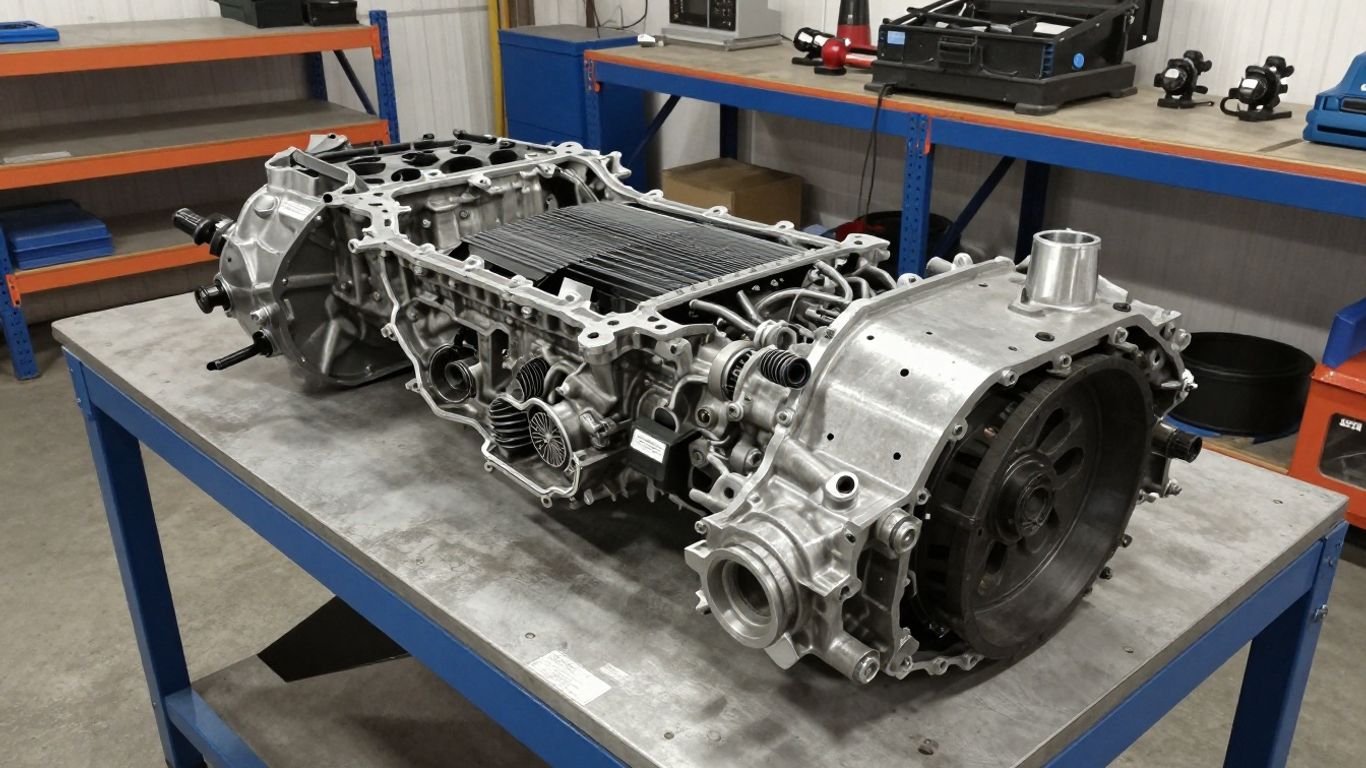
Local dismantlers may have access to donor vehicles and used assemblies, while marque specialists may be better placed to interpret codes and related fitment questions. Ask how the gearbox was removed, whether it was inspected before storage, and whether the supplier can provide photographs of the actual unit. A clear answer about what is known, what is assumed, and what is not included is a good sign.
Dealerships, recyclers, and online marketplaces
Dealership parts departments, automotive recyclers, and online marketplaces each offer different buying experiences. A dealership may provide stronger identification support, a recycler may offer a broader range of used parts, and an online listing may make comparison easier but leave more verification to the buyer. Treat catalogue descriptions as starting points. Confirm the transmission code, condition, included components, and warranty directly before committing.
Questions to ask before requesting a quote
A useful enquiry includes the VIN, transmission code if known, engine details, vehicle year, drivetrain, symptoms, and whether the existing gearbox is available for inspection. Ask whether the quoted unit is tested, drained, complete, and ready for installation. Also ask about the warranty period, exclusions, return process, freight method, and whether the old gearbox must be returned. These questions make vague offers easier to separate from properly documented ones.
Comparing local pickup with interstate delivery
Local pickup allows you to inspect packaging and sometimes view the unit before accepting it. Interstate delivery can widen the available stock, but the gearbox needs secure packaging, suitable handling, and clear responsibility for freight damage. Compare the delivered price rather than the advertised price, and confirm whether a tail-lift, pallet, or workshop delivery address is required. A cheaper unit may lose its advantage once freight, insurance, and handling are added.
Assess the condition and history of a used gearbox
A used gearbox is an assembly with a past, not a sealed guarantee of future performance. Its value depends on how it was used, removed, stored, inspected, and supported after sale. Ask for evidence where possible, while accepting that some dismantled parts will have incomplete histories. The goal is not to demand certainty that no supplier can provide; it is to reduce avoidable uncertainty.
Mileage, service records, and donor vehicle details
Request the donor vehicle’s registration or identifying details where available, its recorded mileage, reason for dismantling, and any service information. A gearbox removed from a damaged vehicle may have a different history from one removed because of a drivetrain fault. Mileage should be supported by a record, inspection note, or credible donor information rather than a casual estimate. If the history is incomplete, that should be reflected in the price and warranty discussion.
Signs of wear, leaks, and fluid contamination
Look around seals, casing joints, plugs, breather areas, and sensor openings for oil residue or evidence of a longstanding leak. Fluid that is unusually dark, metallic, or contaminated may warrant further investigation, although a visual check cannot replace proper testing. Ask whether the unit was drained and examined during removal. Fresh cleaning can hide old residue, so photographs from before cleaning may be useful.
Inspecting casings, mounts, connectors, and shafts
The casing should be checked for cracks, impact marks, stripped threads, and corrosion around mating surfaces. Mounting points, electrical connectors, selector mechanisms, input and output shafts, and flange faces should also be intact. Missing brackets or damaged connectors can turn a seemingly affordable purchase into a parts hunt. Have a technician compare the used unit with the original before installation whenever practical.
When a remanufactured gearbox may be a better choice
A remanufactured or reconditioned gearbox may make more sense when used history is poor, the vehicle is important for work, or labour costs make a second installation especially painful. Compare what has actually been renewed, measured, or replaced, rather than assuming every “reconditioned” label means the same thing. The warranty, testing process, and list of included parts should be written down. A higher purchase price can be reasonable if it buys clearer accountability.
Match the replacement gearbox to your Amarok
Matching is a technical exercise that should involve the original unit, vehicle records, and the installer. Do not rely on a supplier’s assurance that the gearbox is “for that model” unless the supporting details line up. Small differences in codes or attached components can affect installation and electronic operation. If the vehicle is already dismantled, photograph labels and connectors before anything is discarded.
Confirming the exact transmission code
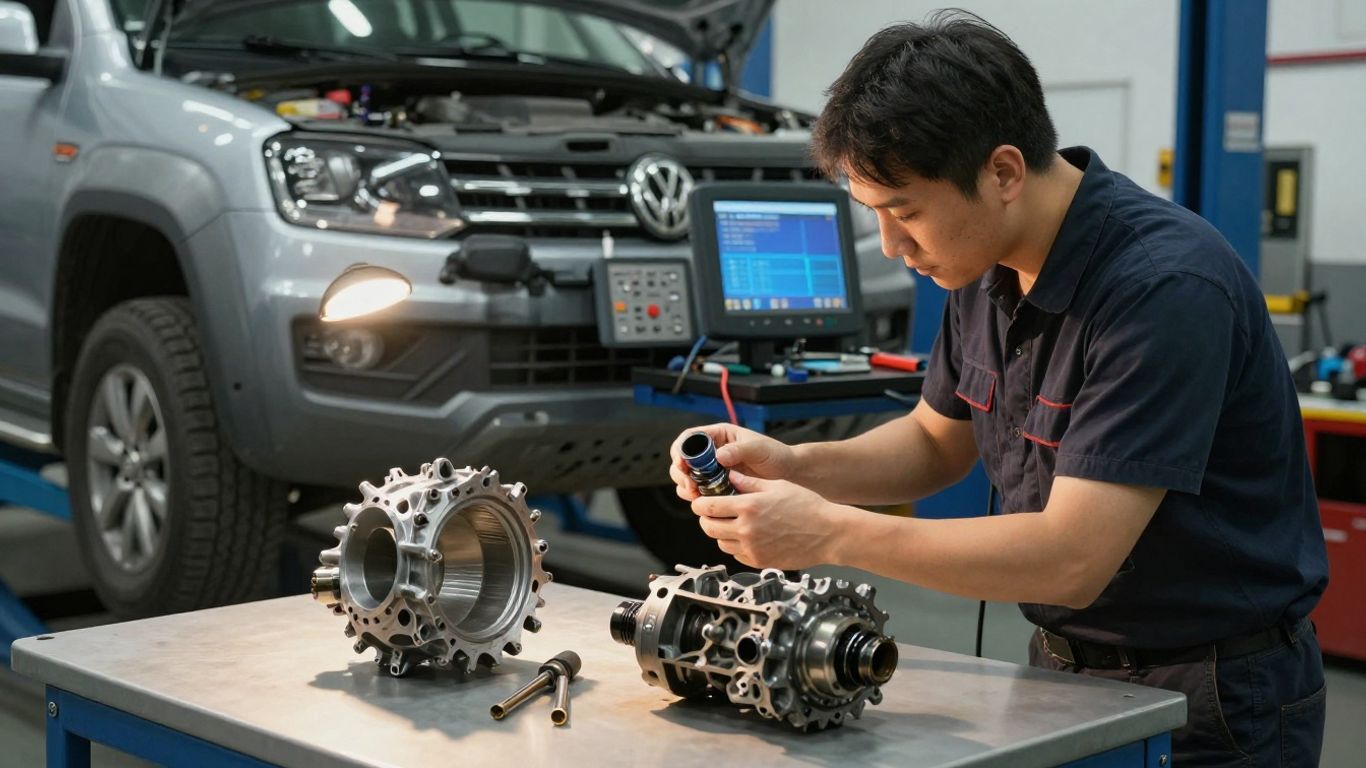
Read the code carefully and provide the complete sequence, including suffixes where present. Similar-looking codes may refer to different ratios, applications, or production changes. The seller should confirm the code on the physical gearbox or its verified donor record. If the code cannot be read, ask a qualified technician or parts professional to identify the unit from several clear photographs and the VIN.
Checking compatibility with the engine and 4MOTION system
The replacement must suit the engine’s connection points, torque requirements, control arrangements, and the vehicle’s 4MOTION drivetrain. Check output flanges, transfer-case interfaces, propeller shafts, mounts, and sensor connections as a group. Approving one component in isolation is risky because the surrounding system determines whether it can be installed and operated correctly.
Evaluating clutch, flywheel, mechatronic, and ancillary parts
The gearbox price may exclude parts that are essential to the repair. For a manual transmission, ask about the clutch, flywheel, release components, seals, and bolts. For an automatic, clarify the condition and inclusion of the mechatronic unit, cooler connections, wiring, and related control components. The original ancillary parts may be reusable, but that decision should follow inspection rather than assumption.
Using the vehicle identification number for final verification
The VIN is the final cross-check before payment and installation. Supply it to the seller and installer, then ask both to confirm the proposed unit and any coding or adaptation requirements. Keep the written confirmation with the invoice. If the VIN, transmission code, and donor description disagree, pause the purchase until someone qualified resolves the discrepancy.
Compare the total cost and value
The sticker price is only one part of a gearbox replacement. Labour, fluids, seals, programming, freight, storage, and possible ancillary parts can materially change the result. Build a comparison using the same assumptions for every option. This is particularly important when a low-cost used unit has an uncertain history or limited warranty.
Purchase price versus reconditioned alternatives
Ask for separate prices for a tested used gearbox, a reconditioned unit, and any exchange or rebuild option that is available. Then compare the scope of work behind each price. A used unit may be appropriate for an older vehicle or a carefully documented repair, while a reconditioned unit may offer more predictable preparation. Neither choice is automatically best; the right answer depends on risk, budget, and expected ownership.
Labour, fluids, programming, and installation costs
Request an itemised estimate from the workshop. It should identify removal and installation labour, replacement fluids, seals, one-time-use fasteners where applicable, diagnostic work, programming, adaptation, and post-fitment testing. Ask what happens if a clutch, mount, cooler, or shaft is found unsuitable after removal. A written allowance for likely extras is easier to manage than an unexpectedly open-ended invoice.
Freight, deposits, and exchange-unit requirements
Some suppliers require a deposit until the old gearbox is returned, while others charge separately for freight or packaging. Clarify when ownership passes, who carries transit risk, how damage is reported, and whether the old unit must be drained or returned on a pallet. These details affect cash flow as well as the final price. They should be settled before the workshop books installation.
Understanding warranty coverage and exclusions
Read the warranty as a repair document, not just a headline duration. Check whether coverage applies to parts only or includes labour, whether installation by an approved technician is required, and which fluids, programming, towing, misuse, or consequential costs are excluded. Find out how quickly a suspected fault must be reported and whether diagnosis must be authorised first. A warranty is most useful when its process is practical for your location.
A good replacement is not merely the cheapest compatible-looking part; it is the part with the clearest identity, condition, and support.
That principle helps put a short warranty or incomplete history into proper perspective. If the risks cannot be priced or explained, the apparent bargain may not be good value.
Plan the installation and post-fitment checks
The installation should be planned before the gearbox arrives. A workshop needs enough time to inspect related components, confirm the unit, complete any required programming, and test the vehicle properly. Rushing the job can make diagnosis harder if an unrelated fault appears afterward. Coordinate the supplier, carrier, technician, and vehicle owner around one realistic schedule.
Choosing a qualified Volkswagen technician
Choose a technician who is familiar with the vehicle’s drivetrain and has suitable lifting, diagnostic, and fluid-service equipment. Ask whether the workshop will verify the replacement before fitting and whether it can complete electronic checks after installation. A qualified technician can also identify worn surrounding parts that might otherwise be blamed on the replacement gearbox. Keep the supplier’s warranty requirements available before work starts.
Preparing the vehicle before gearbox installation
Record the original symptoms, warning lights, fluid condition, and any recent repairs. Photograph the original gearbox, labels, wiring, mounts, and shaft connections where possible. Confirm that the replacement is the agreed unit and that all expected components are present before the old one is discarded. This preparation creates a useful record if a fitment or warranty question arises.
Software programming and adaptation procedures
Some automatic transmission repairs may require diagnostic programming, calibration, or adaptation after installation. The exact procedure depends on the vehicle, transmission, control equipment, and replacement components, so it should be confirmed by the technician rather than guessed from generic instructions. Ask whether programming is included in the estimate and whether fault codes will be cleared and rechecked after the procedure.
Road testing for shifting, noise, leaks, and vibration
The first road test should be controlled and methodical. Check engagement, gear changes, clutch operation where relevant, unusual noise, vibration, warning lights, and fluid leaks at different temperatures and speeds. Reinspect the underside after the test and record any concern before the vehicle returns to normal use. A short follow-up inspection after some driving can catch seepage or mounting issues that were not visible immediately.
Avoid common mistakes when buying a used Amarok gearbox
Most disappointing purchases begin with an assumption that was never checked. The gearbox may be described too broadly, the mileage may be uncertain, or the warranty may not cover the costs the buyer expects. A calm process is usually faster than correcting a wrong shipment or failed installation. Keep every important promise in writing.
Buying based on price without confirming fitment
A low price has little meaning if the unit cannot be installed or requires expensive modifications. Confirm the transmission code, VIN, engine, drivetrain, included components, and return conditions before comparing prices. Also ask whether the photograph shows the actual gearbox rather than a representative image. Price comes after fitment, not before it.
Accepting vague mileage or donor vehicle information
“Low kilometre” is not a complete history. Ask how the mileage was established, where the unit came from, why the donor was dismantled, and whether the gearbox was tested. If the supplier cannot answer, record that limitation and decide whether the warranty and price justify the uncertainty. Silence should not be treated as evidence of good condition.
Overlooking warranty terms and return conditions
A warranty can be difficult to use if the buyer has not followed its installation, fluid, diagnostic, or reporting requirements. Read whether labour is covered, whether the old unit must be returned, and what evidence is required for a claim. Confirm who pays return freight and whether a replacement is offered before a refund. These terms matter most when the repair has already consumed workshop time.
Failing to plan transport, storage, and installation timing
A gearbox should not sit exposed to weather or be moved without suitable support and packaging. Arrange delivery to a location equipped to receive a heavy automotive assembly, then schedule installation while the supplier’s return window and warranty conditions remain active. Check the unit promptly on arrival and report freight damage immediately. Good timing protects both the part and your options if something is wrong.
Conclusion
Buying a used Volkswagen Amarok gearbox in Adelaide becomes much less daunting when identification, inspection, total cost, and installation are handled as one process. Confirm the code and VIN, examine the donor history, compare realistic fitted prices, and agree on warranty terms before payment. That discipline will not remove every risk, but it gives you a far better chance of choosing a gearbox that fits, performs, and is properly supported.