Key Takeaways
Genuine second-hand parts can make Volkswagen repairs more affordable when compatibility and condition are checked carefully.
- Confirm the model, year, engine, transmission, and VIN before buying.
- Ask whether a used component has been inspected or tested.
- Compare the full cost, including delivery and installation.
- Treat brakes, steering, restraints, and other safety-related parts cautiously.
- Use a qualified mechanic when installation or coding is complex.
Understanding genuine second-hand Volkswagen parts
A genuine second-hand Volkswagen part is an original component removed from another Volkswagen vehicle, rather than a newly manufactured aftermarket substitute. That distinction can matter when trim, connectors, mounting points, or electronic systems need to match precisely. It does not mean every used component is automatically suitable, though. Condition, history, and fitment still need careful attention.
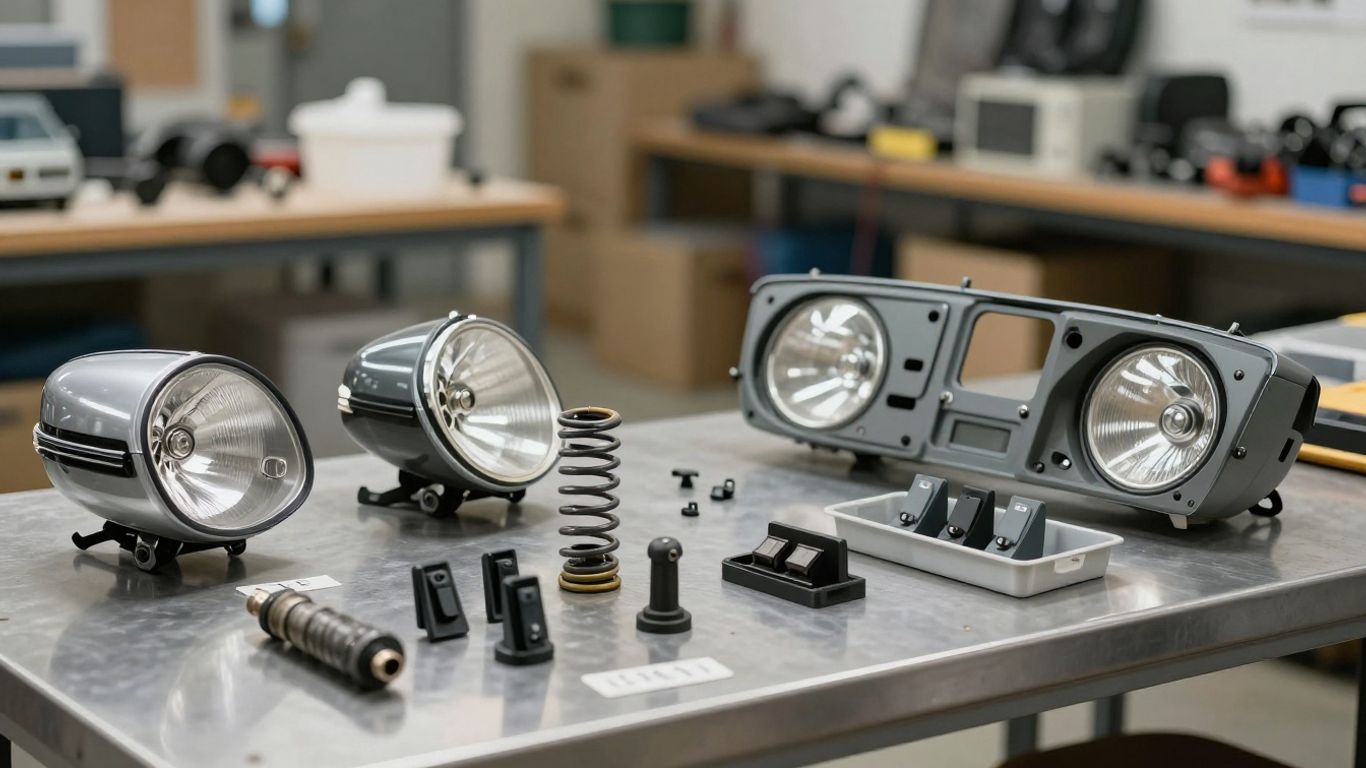
The phrase genuine second-hand parts is useful only when it describes both origin and condition honestly. A part may be original but worn, damaged, or unsuitable for a particular variant. The safest purchase starts with clear identification and a supplier willing to answer practical questions.
What makes a part genuinely Volkswagen
An original Volkswagen component is made for, or fitted to, a Volkswagen vehicle and should have identifying details such as a part number, label, casting mark, or distinctive connector. Those markings help distinguish a removed factory component from a visually similar replacement. They also provide a starting point for checking whether the item belongs to the right vehicle variant.
The term should not be confused with “looks like the original”. An aftermarket panel, sensor, mirror, or interior piece may fit several vehicles, but its construction and specifications can differ. Ask for photographs of the actual part and request its identifying number before agreeing to buy.
Used, reconditioned, and aftermarket parts compared
Used parts are removed from a donor vehicle and sold in their existing condition, subject to whatever inspection the supplier performs. Reconditioned parts have generally been cleaned, repaired, rebuilt, or tested, although the exact work varies by component and supplier. Aftermarket parts are made by another manufacturer and may be new, but they are not original Volkswagen components.
The right choice depends on the job. A clean interior switch or undamaged body panel may be a sensible used purchase, while a reconditioned mechanical component may offer more reassurance if its work is documented. Price alone is not enough; ask what was checked, what was replaced, and what support applies if the part does not work.
Volkswagen models commonly supported in Blacktown
Blacktown suppliers may handle a broad range of Volkswagen vehicles, but stock changes as donor cars arrive and parts are sold. Commonly encountered vehicles can include hatchbacks, sedans, wagons, SUVs, and commercial vans, with substantial differences between generations and engine choices. A model name by itself is rarely enough to confirm fitment.
Bring the registration details, vehicle identification number, engine information, and photographs of the existing component where possible. This gives a dismantler or specialist a much better chance of locating the correct item instead of offering a part that merely resembles yours.
When second-hand parts offer the best value
Second-hand parts tend to make the most sense when the original component is expensive to replace new, the vehicle is older, or the part is cosmetic and easy to inspect. Body panels, wheels, mirrors, trim, and selected interior pieces can sometimes deliver worthwhile savings without changing how the vehicle operates. A good colour match and undamaged mounting points are still essential.
Value is less obvious when removal and installation are difficult, freight is high, or a failed part could create a safety risk. Consider the likely lifespan and the labour involved, not just the price printed in an online listing.
Where to find cheap Volkswagen parts in Blacktown
The search for cheap Volkswagen parts Blacktown Sydney – genuine second hand is usually more productive when it begins with the exact component needed. Local dismantlers may have donor vehicles and used stock, while specialist suppliers may be better placed to identify Volkswagen-specific parts. Online listings can widen the search, but they also make verification more important.
A short phone call before travelling can prevent a wasted trip. Ask whether the listed part is still available, whether it is the exact version required, and whether pickup or delivery is possible. Photographs and part numbers are more useful than a broad request for “Volkswagen spares”.
Volkswagen wreckers and auto dismantlers
Wreckers and auto dismantlers recover usable components from vehicles that are no longer being repaired or registered. Their stock may include body panels, suspension pieces, engines, transmissions, lights, doors, wheels, and interior parts, depending on the vehicles currently being dismantled. Availability is unpredictable, so a supplier’s current inventory matters more than a general category list.
When calling, describe the vehicle precisely and explain whether you need a left or right-hand component, front or rear version, or manual or automatic part. Ask for photos of the actual item, not a catalogue image. This simple step can reveal colour differences, broken tabs, corrosion, or missing fittings.
Local auto parts stores and specialist suppliers
A local parts store may help with routine replacement items, while a Volkswagen specialist can be useful when the component has unusual connectors, trim differences, or electronic requirements. The supplier should be able to explain whether the item is used, reconditioned, or new aftermarket stock. Clear terminology prevents an inexpensive quote from becoming an unsuitable purchase.
It is also worth asking whether the part is supplied complete. A mirror, door, cooling assembly, or electronic module may be shown as one item but sold without brackets, wiring, sensors, or control units. Knowing what is included makes price comparisons fairer.
Online searches for Sydney Volkswagen parts
Online searching is helpful when local stock is limited, especially for older vehicles or less common trim pieces. Search using the model, production year, engine, component name, and part number where available. Include the side and position for body or suspension parts, since “front” and “rear” listings are not interchangeable.
Before paying, inspect the listing for the donor vehicle details, photographs, condition notes, and freight terms. A vague listing may still be legitimate, but it leaves too many unanswered questions. Written confirmation of compatibility is preferable to relying on a generic vehicle selector alone.
Checking stock before visiting a supplier
Stock checks save time, but the quality of the check depends on the information provided. Send the VIN, registration details, a photograph, and the old part number if you have them. Then ask the supplier to confirm the precise variant and whether the component has been visually inspected.
Use a simple comparison record for several quotes so that important differences do not disappear behind a low headline price. The details below are especially useful when contacting suppliers around Blacktown.
| Detail to confirm | Why it matters | Useful evidence |
|---|---|---|
| Exact part number | Helps separate similar variants | Label or casting photograph |
| Donor vehicle | Shows likely age and specification | Model, year, and engine details |
| Condition | Reveals wear or missing pieces | Clear photos of all sides |
| Collection or freight | Changes the final price | Written delivery estimate |
After checking these points, you can compare like with like rather than choosing the cheapest listing by default. If a supplier cannot confirm basic identification, keep looking or ask your mechanic to review the option first.
Choosing the right part for your Volkswagen
Correct fitment is the difference between a useful bargain and an expensive mistake. Volkswagen vehicles can share a name while differing in engine, drivetrain, equipment level, production period, and electronic configuration. These differences may affect even parts that appear identical in photographs.
Take the old component or its details with you whenever possible. A careful match reduces the risk of paying for freight, installation, and return handling on a part that cannot be used.
Matching the model, year, engine, and transmission
Start with the full vehicle description rather than the model badge alone. Record the model, build year, engine size or code, transmission type, body style, and drivetrain. A component designed for one engine or transmission may have different brackets, sensors, cooling requirements, or software from a related version.
The vehicle’s build date can be particularly helpful where a model changed midway through a production run. Ask the supplier to check the donor vehicle details against yours, and be cautious when a listing says only “fits Volkswagen” without further qualification.
Using the VIN to confirm compatibility
The VIN provides a more precise reference than a model name or registration plate. Give it to the supplier or mechanic and ask what information it confirms for the part being considered. For electronic or coded components, the VIN may not by itself guarantee a straightforward installation, but it can help narrow the correct vehicle specification.
Keep a record of the VIN, part number, supplier’s confirmation, and any exclusions. If a seller says the component is compatible only after modification or programming, get that detail in writing before purchase.
Comparing original equipment numbers
Original equipment numbers are useful when several versions of a component look alike. Compare the number on the old part with the number on the proposed replacement, while allowing for superseded numbers or revisions. A small suffix can indicate a meaningful difference, so do not assume that a mostly matching sequence is enough.
A supplier familiar with Volkswagen Genuine Parts may be able to explain whether a number has been replaced by a later reference. Even then, confirmation should come from the vehicle details and the component itself, not from appearance alone.
Avoiding common fitment mistakes
Common errors include ordering the wrong side, confusing a facelift model with an earlier version, overlooking a transmission difference, and buying an electronic module without checking coding requirements. Interior trim can also vary by colour, upholstery, steering position, and equipment level. These mistakes are easy to make when shopping quickly online.
Pause before ordering and compare the listing with the old part. If the mounting points, plugs, dimensions, or label do not match, ask questions before making payment. A few minutes of checking is usually cheaper than a return freight charge or a second installation appointment.
Inspecting genuine second-hand parts before buying
Inspection should match the type of component. A door panel needs a close look for dents, rust, paint damage, and straight mounting points, while an alternator or suspension component needs attention to function, play, leaks, and wear. Photographs help, but they cannot replace a physical inspection for every part.
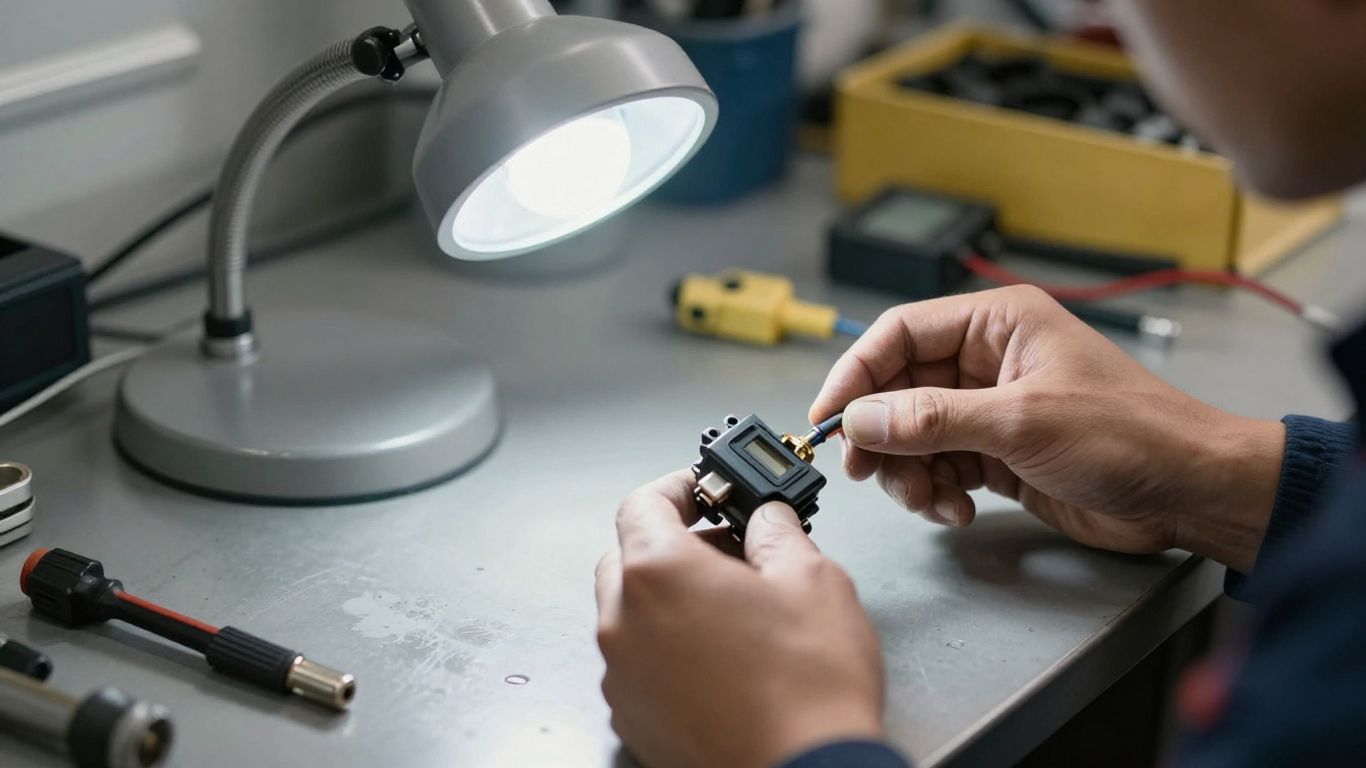
Ask what the supplier knows about the donor vehicle and how the component was assessed. Condition matters as much as price when the part will be difficult to replace or expensive to install.
Signs of wear, damage, or previous repairs
Look for cracks, distortion, corrosion, fluid stains, broken clips, stripped threads, and evidence of welding or patching. Previous repairs are not automatically disqualifying, particularly for some body components, but they should be disclosed and reasonably executed. Uneven paint, bent brackets, or missing fasteners may indicate a more serious history.
For trim and panels, inspect edges and fixing points as carefully as the visible surface. For mechanical parts, ask whether seals, bearings, belts, or other wear items are included and what condition they are in.
Checking electrical and mechanical components
Electrical parts should be checked for damaged plugs, cut wiring, corrosion, burnt areas, and missing control modules. Ask whether the item was tested and what “tested” means in practice. A visual inspection is not the same as an operational test, and a component may require coding or calibration after installation.
Mechanical parts deserve attention to movement, noise, leaks, cracks, and excessive play. If you cannot assess those points yourself, have a mechanic inspect the part or confirm that the supplier accepts returns if it fails an agreed test.
Asking about testing, returns, and warranties
Before buying, ask whether the part was tested, whether the test applies to the actual item, and how long any warranty or return period lasts. Clarify who pays return freight, whether the part must be installed by a qualified mechanic, and whether damage during installation affects the agreement. Keep the invoice and written messages.
A clear policy is valuable because used components can fail for reasons that are difficult to identify immediately. Read the conditions before collection or payment rather than assuming every supplier offers the same protection.
Knowing when a used part should be avoided
Avoid a used part when its identity cannot be confirmed, damage affects a mounting or sealing surface, corrosion is advanced, or the seller cannot explain its condition. Be especially cautious with parts that are already visibly compromised or that would be costly to remove again if they fail.
Safety-related and high-load components deserve a higher threshold for confidence. When the history is unclear and the saving is modest, a new or professionally reconditioned alternative may be the more sensible choice.
Saving money without compromising quality
A low purchase price is only one part of the repair cost. The complete figure may include freight, collection, labour, diagnostic work, programming, seals, fluids, and a refundable core charge. Comparing those items early gives a more honest picture of the saving.
It also helps to separate cosmetic repairs from jobs that affect braking, steering, restraint systems, or vehicle control. The cheapest available component is not necessarily the best value when reliability and installation risk are considered.
Comparing used part prices with new alternatives
Ask for prices on a used part, a reconditioned option, and a new alternative where each is realistically available. Compare condition, included hardware, warranty terms, and expected installation time alongside the price. A slightly dearer component with a clear return policy may cost less overall than an uncertain bargain.
For a body or interior part, colour and completeness can change the value significantly. For a mechanical or electrical component, testing and warranty information may matter more than cosmetic appearance. Make the comparison around the repair you actually need, not just the item on the shelf.
Calculating delivery, installation, and core charges
Freight can be substantial for doors, engines, transmissions, bonnets, and other bulky items. Installation may also require new gaskets, fluids, seals, clips, or diagnostic procedures. Some reconditioned components carry a core charge that is refunded only when the old unit is returned in an acceptable condition.
Write down each cost before approving the purchase. A simple total should include the part, delivery or pickup, labour, required consumables, diagnostic work, and any refundable or non-refundable charge. This prevents an apparently cheap component from becoming an expensive repair.
Negotiating prices with wreckers and suppliers
Polite negotiation works best when you have accurate information and a realistic comparison. Ask whether the price changes if you collect the part, buy an included accessory, or accept minor cosmetic marks that do not affect fitment. Do not pressure a supplier to overlook damage or uncertainty.
You can also ask whether the component has been sitting in stock, whether it is complete, and whether a tested alternative is available. The goal is a fair transaction with the condition and terms understood by both sides.
Prioritizing safety-critical Volkswagen components
Brakes, steering, airbags, seat belts, tyres, suspension joints, and structural parts should be judged conservatively. A used component may be acceptable when its identity, condition, and history are clear, but visible damage or uncertain provenance should end the discussion. Ask a qualified mechanic when you are unsure.
A saving is worthwhile only when the part remains dependable for the job it must perform.
That principle does not mean every repair requires a new component. It means the level of evidence should reflect the consequence of failure, and convenience should never replace proper inspection.
Buying and installing Volkswagen parts in Sydney
Buying locally around Blacktown can simplify collection, inspection, and follow-up, while delivery may be more convenient for larger parts or limited local stock. Either route works best when the purchase details are settled before the component leaves the supplier. Keep the vehicle information and quote together.
Installation is another part of the decision. Some parts are straightforward, but others require specialist tools, programming, alignment, bleeding, or a safety check after fitting.
Questions to ask before purchasing
Ask for the exact part number, donor vehicle details, condition, included fittings, testing performed, price, collection or freight arrangements, and return terms. For electrical modules, ask whether coding is required. For engines, transmissions, and other major assemblies, ask what ancillary parts are included and whether the quoted condition has any limitations.
Write down the answers and compare them with the invoice. Clear questions protect both sides and make it easier to resolve a problem if the supplied item differs from what was described.
Arranging pickup or delivery around Blacktown
For collection, confirm the address, opening hours, payment method, loading requirements, and whether the part will be ready when you arrive. Bring suitable protection for painted panels and enough help for heavy items. Inspect the component before accepting it, especially if the sale terms make returns difficult.
For delivery across Sydney, ask how the part will be packaged and whether freight insurance or damage procedures apply. Photograph the parcel and component when it arrives, then report visible damage promptly rather than waiting until installation.
Using a qualified mechanic for installation
A qualified mechanic can confirm fitment, identify related faults, and complete work that requires specialist equipment. This is particularly useful for braking, steering, suspension, engine, transmission, restraint, and electronically controlled components. The mechanic may also spot missing hardware before the vehicle is dismantled.
Provide the mechanic with the supplier’s part details and any testing or warranty conditions. If the component needs coding, adaptation, alignment, or calibration, arrange that work before assuming the repair is complete.
Disposing of replaced parts responsibly
Old parts should not simply be left in general rubbish, especially when they contain oil, coolant, brake fluid, batteries, refrigerant, or other regulated materials. Ask the workshop, dismantler, council, or recycling service how the particular item should be handled. Some suppliers may also want the old component returned under a core arrangement.
Responsible disposal keeps hazardous materials out of household waste and may recover useful metal or components. It also leaves the repair area clear and makes the vehicle’s maintenance history easier to manage.
Conclusion
Genuine second-hand Volkswagen parts can reduce repair costs in Blacktown and across Sydney when buyers verify fitment, inspect condition, and calculate the complete installed price. Start with the VIN and original part details, ask direct questions, and use a qualified mechanic whenever the work or component carries meaningful safety or technical risk. That measured approach makes a bargain more likely to become a dependable repair.