Key Takeaways
A used GTI engine can be a sensible way to keep a well-loved hatchback on the road, but matching and condition matter more than a low advertised price.
- Confirm the Golf GTI’s generation, model year, engine code, and transmission before buying.
- Ask for mileage, service records, testing details, and the donor vehicle’s identification.
- Compare complete engines and long blocks on total installed cost, not purchase price alone.
- Inspect oil, coolant, turbocharger, timing components, and compression where possible.
- Keep every invoice, warranty document, and installation record after the engine swap.
Understanding Volkswagen Golf GTI engine options
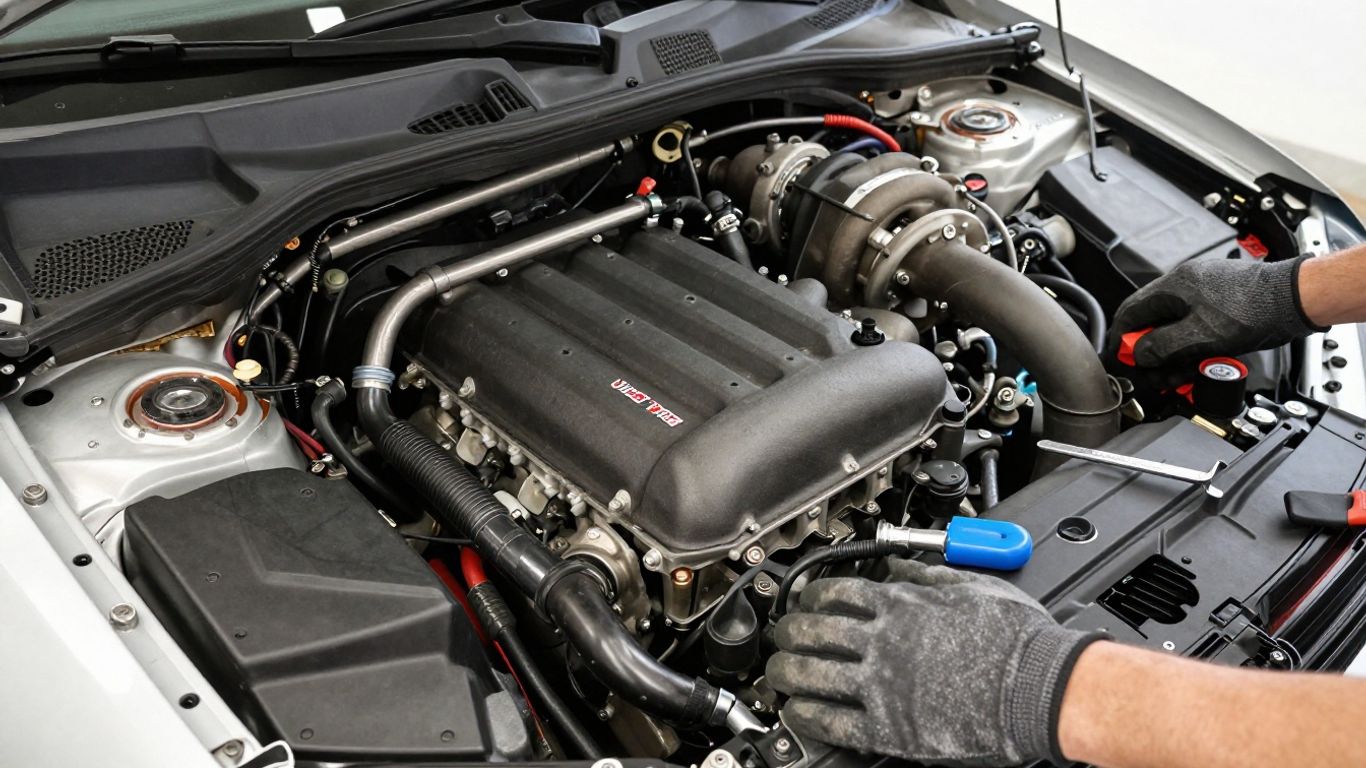
Volkswagen Golf GTI engines vary substantially across generations, even when the cars look closely related. A suitable replacement must match more than the badge and approximate capacity. Model year, engine family, engine code, electronics, and transmission all influence whether an engine is genuinely compatible. That is why careful identification should come before searching Melbourne listings.
Engine generations and model-year differences
The Golf GTI has been sold through several generations, with changes to engine design, fuel systems, turbocharging hardware, emissions equipment, wiring, and software. Two cars described casually as “Mk7 GTIs”, for example, may still differ by production year, market specification, or drivetrain details. Treat the registration details and vehicle identification number as starting points, then confirm the physical engine and code.
A replacement sourced from the wrong generation may look close enough to tempt a buyer but create expensive work during installation. Ancillary brackets, sensors, intake and exhaust connections, mounts, and control modules can all complicate an otherwise promising purchase. The safest approach is to compare the donor and recipient vehicles line by line before money changes hands.
EA888 engine variations and specifications
The EA888 name covers a family of turbocharged petrol engines rather than one universal unit. Versions can differ in displacement, cylinder-head design, turbocharger arrangement, emissions equipment, oil-management systems, and calibration. Those differences affect both performance and interchangeability, so a seller’s description should never replace the engine code and supporting photographs.
Capacity and quoted output are useful clues, but they do not establish a match on their own. A workshop can help confirm whether the long block, external hardware, and electronic controls are suitable for the recipient car. This is especially worthwhile when a listing uses broad terms such as “EA888 GTI motor” without identifying the precise variant.
Performance trims, output, and compatibility
GTI performance trims may use different calibrations or hardware from standard Golf models, and special editions can add another layer of uncertainty. Factory output figures should therefore be treated as identification clues rather than proof that an engine will swap directly into another car. The transmission, immobiliser system, exhaust arrangement, and cooling package also need consideration.
Compatibility is ultimately a complete-vehicle question. Before accepting an engine, compare the donor’s model year, engine code, gearbox type, wiring connectors, ECU arrangements, and included accessories with the recipient’s records. A specialist can identify which parts should transfer from the original engine and which should remain with the replacement.
Why engine codes matter when sourcing a replacement
An engine code narrows the search far more effectively than a year range or a generic model description. It gives the buyer and installer a common reference for checking the block, cylinder head, ancillaries, and known fitment information. The engine code is essential when a seller has several similar units in stock.
A simple comparison table can help organise the first conversation with a supplier, while still leaving final confirmation to a qualified technician.
| Detail to compare | Why it matters | Where to confirm |
|---|---|---|
| Engine code | Identifies the specific engine variant | Engine marking and vehicle records |
| Model year | Flags generation and equipment changes | Registration and VIN information |
| Transmission | Affects mounting and control compatibility | Vehicle documentation and gearbox label |
| Included hardware | Shows what may need transferring | Seller photographs and written inventory |
The table is a screening tool, not a substitute for inspection. If any row remains uncertain, pause the purchase and ask for photographs, measurements, or a workshop assessment before assuming the parts will fit.
How to find the right used GTI engine in Melbourne
Searching for Used Volkswagen Golf GTI engines Melbourne Victoria usually produces a mixture of dismantler stock, specialist suppliers, repairers, and private advertisements. Availability can change quickly, and an engine advertised locally may already be reserved or missing important components. A disciplined enquiry helps separate a usable replacement from a vague listing. It also makes transport and installation planning much easier.
Checking vehicle identification and engine numbers
Begin with the recipient vehicle’s VIN, registration details, model year, engine code, and gearbox information. Photograph the identification markings if they are accessible, and give those details to every seller rather than relying on a verbal model description. The donor engine should have its own identification recorded, along with the vehicle it came from.
Ask whether the number has been checked against the supplier’s inventory and whether the pictured engine is the exact unit being offered. This prevents a common misunderstanding in which a generic stock photograph is treated as proof of the engine’s condition or specification. Written confirmation is useful if the unit later proves different from the advertised item.
Comparing wreckers, dealers, and private sellers
Different seller types offer different levels of information and support. A dismantler may know the donor vehicle’s history and have related parts available, while a specialist supplier may provide clearer fitment advice. A private seller might offer a competitive price, but the buyer may need to arrange more of the testing, transport, and risk assessment independently.
Compare the evidence behind each listing rather than comparing only the headline amount. Ask how mileage was established, whether the engine was removed from a running vehicle, what testing was completed, and what is included. The most useful seller is the one who can answer specifically and document the answers.
Verifying local stock and interstate supply
Melbourne stock is convenient because it may allow an inspection, faster collection, and simpler communication with the installer. Interstate supply can widen the search when a particular code is uncommon, but freight, insurance, delivery timing, and return arrangements become more important. A distant engine is not necessarily a poor choice; it simply needs stronger documentation before dispatch.
Confirm whether the unit is physically in stock, where it is located, and how it will be packaged. Ask for current photographs showing the engine from several angles, including identification markings and any visible damage. That small step can prevent a buyer from paying for an engine that exists only as a future sourcing promise.
Questions to ask before purchasing
A short, consistent set of questions makes different listings easier to compare. Ask for the donor vehicle details, recorded mileage, service history, reason for dismantling, compression or running-test results, included accessories, warranty period, and return conditions. Also ask who pays freight if the engine arrives damaged or does not match the written description.
Do not be pressured into skipping these questions because a listing is described as urgent. A seller who cannot confirm basic details may still have a useful engine, but the uncertainty should be reflected in the risk assessment and price. If the answers conflict, treat that conflict as a reason to investigate rather than an invitation to guess.
Inspecting a used Volkswagen Golf GTI engine
A used engine should be assessed as a mechanical component, not merely as a photograph with an attractive price. External cleanliness can hide neglected seals, corrosion, impact damage, or missing hardware. Ideally, the inspection involves the installer who will ultimately fit the engine, because they can identify concerns that are easy for a general buyer to overlook. Even a remote purchase benefits from a written inspection report and clear photographs.
Reviewing mileage and service history
Mileage is useful only when its source is credible. A donor vehicle’s service records, dismantler documentation, inspection notes, and odometer information can reinforce one another, while an unsupported number should be treated cautiously. Ask whether the mileage refers to the engine itself or simply the donor car, and whether major components were replaced during its service life.
Service history can reveal oil-change intervals, cooling-system work, timing-chain attention, turbocharger repairs, and previous overheating. Missing records do not automatically disqualify an engine, but they increase the value of independent testing and reduce the confidence that can be placed in a mileage claim.
Checking for oil leaks and cooling-system damage
Inspect the sump, front and rear seals, cam-cover area, turbocharger oil lines, coolant connections, and the joint between the engine and gearbox. Fresh washing may make an engine look tidy while removing the residue that would otherwise show an older leak. Look for staining, cracked housings, damaged threads, and signs of impact around the block.
Cooling-system damage deserves particular attention because overheating can create problems that are not obvious from the outside. Check for corrosion, broken plastic fittings, missing hoses, warped surfaces, and contamination in the oil or coolant passages. A workshop inspection is worthwhile if the engine has been stored for a long period or recovered from a damaged vehicle.
Assessing turbocharger and timing-chain condition
The turbocharger should be checked for damaged compressor blades, excessive shaft movement, oil accumulation, and signs of contact within the housing. The timing system also warrants careful review, especially where the engine’s history is incomplete or the unit has been removed for an unknown reason. Parts that seem serviceable on a bench may still be poor value if they require immediate replacement after installation.
Ask whether the timing components and turbocharger were inspected before removal, and request the findings in writing. If no assessment was performed, budget for the installer to examine them while access is easy. That may increase the initial cost but can avoid paying for the same labour twice.
Understanding compression and diagnostic testing
Compression testing can provide useful information about cylinder sealing, although the results need to be interpreted alongside the test method and engine condition. A leak-down test can add more detail by helping identify whether pressure is escaping through the valves, rings, or head gasket. Neither test should be presented as a complete guarantee of future reliability.
Diagnostic scans and running tests can reveal fault codes, misfires, boost concerns, sensor issues, and irregular operating data where the engine was tested in the donor vehicle. Ask for the actual report rather than a simple statement that the engine was “checked”. A clear record gives the installer a better starting point and makes the seller’s warranty easier to discuss.
Evaluating used GTI engine prices in Victoria
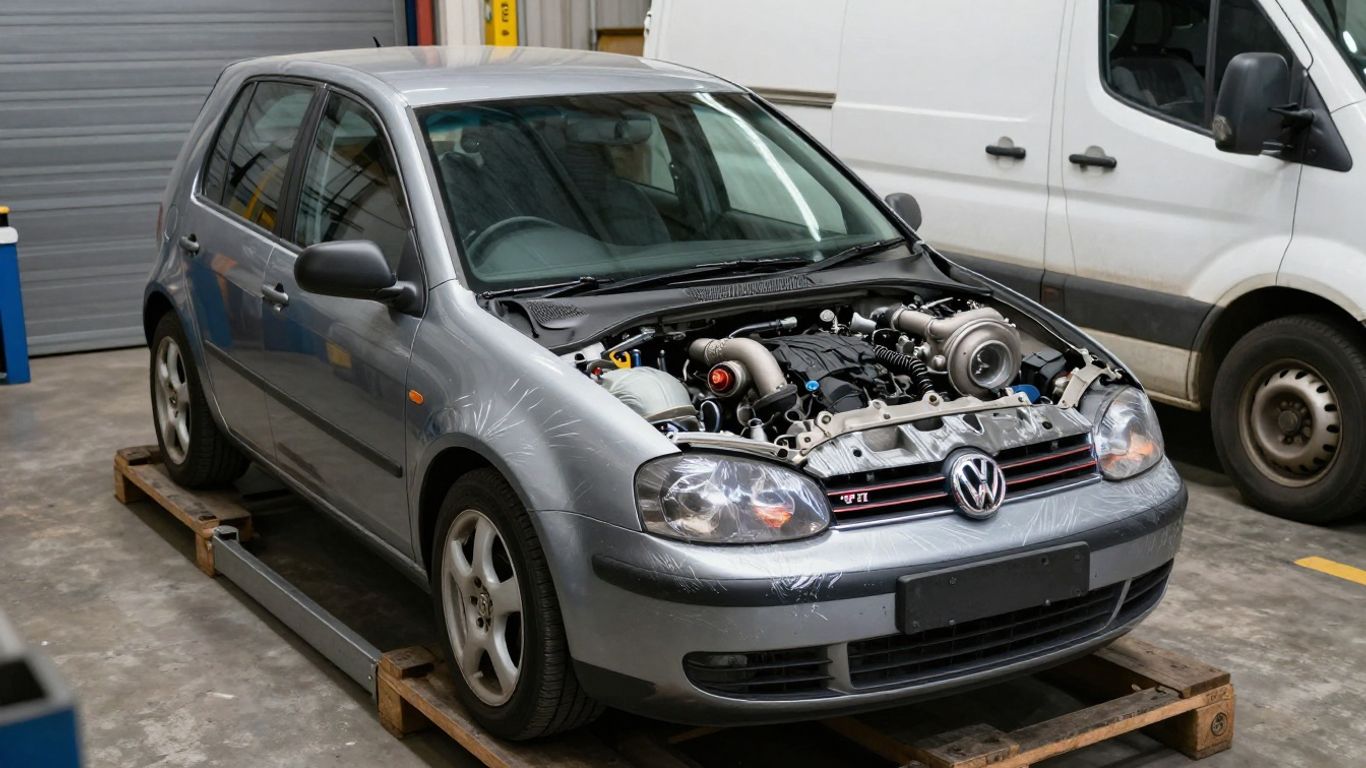
Used GTI engine prices in Victoria vary because the units being compared are often not equivalent. One listing may include the turbocharger, intake, wiring, sensors, and accessories, while another may be a bare long block. Mileage, test evidence, warranty terms, freight, and the seller’s ability to support fitment can all change the real value. The lowest advertised amount is rarely the whole project budget.
Factors that influence engine costs
Price usually reflects condition, completeness, rarity, demand, and the confidence behind the seller’s information. A tested engine from a documented donor vehicle may command more than an untested unit, but the extra evidence can reduce the risk of discovering major faults after installation. Availability for a specific code also affects how much searching and freight coordination may be required.
Consider whether the engine includes the turbocharger, manifolds, alternator, starter, sensors, injectors, flywheel, and other attached equipment. These details should be listed individually because “complete” can mean different things to different sellers. Ask for a written inventory before comparing two apparently similar offers.
Comparing complete engines with long blocks
A complete engine may reduce the amount of accessory transfer required, but its included components still need inspection and compatibility checks. A long block can be a practical choice when the original turbocharger, manifolds, sensors, and ancillaries are known to be healthy. It may also allow the installer to retain vehicle-specific parts that already match the recipient car.
The right choice depends on condition and labour, not the label alone. A cheaper long block can become expensive if several external components need replacement, while a complete unit may contain worn parts that add little value. Ask the workshop to price both pathways using the same assumptions.
Budgeting for transport, labour, and extra parts
The engine purchase is only one line in the replacement budget. Include freight or local delivery, fluids, filters, seals, gaskets, belts or chains where appropriate, mounts, hoses, diagnostic work, and labour. Allowance for unexpected fasteners or damaged connectors is sensible, particularly when the donor history is incomplete.
A written estimate can separate known costs from contingencies. It should also state whether the quote covers removal of the old engine, installation of the replacement, testing, fault-code diagnosis, and road testing. That makes it easier to compare a local offer with an interstate unit that appears cheaper at first glance.
Recognising unusually cheap listings
An unusually cheap engine may be a bare block, an untested unit, a high-mileage assembly, or a component with missing identification. It may also carry a short warranty with significant exclusions. The price itself is not proof of a problem, but the gap should prompt more questions.
A low purchase price is only useful when the engine’s condition, contents, and return terms are clear.
Use the answers to recalculate the installed cost rather than dismissing the listing immediately. If the seller cannot explain what is included or why the price differs so sharply from comparable units, the uncertainty may outweigh the apparent saving.
Installing a replacement Golf GTI engine
Installation quality has a direct effect on how confidently a replacement engine can be assessed afterward. The workshop must understand the recipient car, the donor engine, and the parts that should be transferred between them. Rushing the job to reduce labour can leave old seals, contaminated fluids, or incompatible electronics in place. A careful installation creates a much better baseline for future maintenance.
Preparing the vehicle before installation
Before removal, record existing fault codes, engine symptoms, fluid condition, and any useful diagnostic data. Photograph wiring routes, hose connections, brackets, and accessory positions before disassembly. These records help distinguish pre-existing vehicle faults from issues introduced during the swap.
The installer should confirm the replacement engine code and inspect the recipient’s mounts, gearbox, cooling system, fuel system, and electrical connectors. Cleaning the engine bay while access is available can also expose damaged wiring or leaks that might otherwise be hidden. Preparation is slower than guesswork, but it usually makes reassembly more controlled.
Replacing seals, fluids, and wear components
Accessible seals, gaskets, filters, hoses, and fluids deserve consideration before the engine is installed. Reusing every old wear component may save money on the day but create a leak or service interruption soon afterward. The replacement engine should be assessed on its own condition, while vehicle-specific parts should be inspected rather than automatically transferred.
Agree on the parts plan before work begins. The owner should know which items are essential, which are recommended, and which will be replaced only if inspection finds damage. This keeps the repair transparent and avoids disputes when additional work becomes necessary.
Matching the engine with electronics and transmissions
Modern GTI swaps involve more than physical mounting. The engine control unit, immobiliser, sensors, throttle systems, wiring, instrument communication, and transmission controls may need to recognise one another. The installer should establish whether original electronics will be retained, whether coding or adaptation is required, and whether the donor hardware differs from the recipient’s setup.
The gearbox and clutch or DSG-related components also need a compatibility check. A mechanically suitable engine can still require changes to ancillary parts or software before the vehicle operates correctly. Ask the workshop to include post-installation scanning and adaptation in the work plan rather than treating them as optional extras.
Choosing a qualified Volkswagen specialist in Melbourne
Choose a Melbourne workshop that can explain its process for engine identification, removal, installation, diagnostics, and post-repair testing. Experience with the relevant Golf GTI generation matters because familiar-looking engines can still have different electronic and mechanical requirements. The workshop should also be willing to communicate directly with the seller when fitment questions arise.
Before authorising the job, request a written scope, labour estimate, parts assumptions, testing procedure, and warranty responsibilities. Clear paperwork protects both sides and gives the owner a practical record if a concern appears after collection. A specialist who asks detailed questions at the beginning is generally preferable to one who promises a quick fit without inspecting the details.
Protecting your purchase after installation
The first weeks after an engine swap are a period for observation, documentation, and careful follow-up. A replacement that starts and idles correctly still needs to be monitored under normal driving conditions. Keep the seller’s documents and the installer’s invoices together, and record any warning lights, fluid changes, or unusual noises. Good records make small problems easier to investigate.
Reviewing warranty terms and exclusions
Read the warranty before purchase and again before installation. Check its duration, coverage, exclusions, inspection requirements, labour provisions, transport responsibilities, and process for reporting a fault. Some warranties may cover the supplied engine but exclude attached accessories, overheating, contamination, installation errors, or continued driving after a warning appears.
Ask the seller to clarify anything that is vague in writing. The installer may also have separate workmanship terms, so determine which party handles a fault involving both the supplied engine and the installation. A clear agreement is far more useful than a casual assurance made at collection.
Confirming registration and repair documentation
Keep the invoice, donor details, engine code, mileage evidence, test reports, warranty, freight record, and installation paperwork. These documents help establish what was supplied and when it was fitted. They may also be useful for future servicing, insurance discussions, or a later sale.
Confirm with the workshop whether any local documentation or inspection requirements apply to the repair. Requirements can depend on the vehicle and the nature of the work, so the owner should obtain current advice from the relevant authority or qualified repairer rather than relying on a generic online statement. Accurate records remain valuable regardless of the administrative pathway.
Following the recommended running-in process
Ask the installer whether the replacement engine requires a particular running-in procedure. The answer may depend on whether the engine is a complete used assembly, a long block with rebuilt components, or a unit with new internal parts. Follow the written guidance on operating temperatures, load, speed, fluid checks, and the first service interval.
Avoid assuming that a used engine can be driven immediately as though nothing has changed. The workshop may want an early inspection for leaks, a fluid recheck, or a diagnostic scan after initial kilometres. A measured process gives the owner a chance to catch installation issues before they become larger failures.
Monitoring performance after the engine swap
Pay attention to starting, idle quality, boost behaviour, coolant temperature, oil level, smoke, warning lights, vibration, and unusual sounds. Keep a simple dated record during the early driving period, including when the symptom occurred and whether the engine was hot or cold. That detail can save time when the workshop diagnoses an intermittent fault.
Stop driving and contact the installer promptly if the engine overheats, loses oil pressure, develops heavy smoke, or produces a serious warning. Do not continue operating the vehicle simply to see whether the problem disappears. Early communication also helps preserve warranty rights when the seller requires prompt notification.
Conclusion
Buying and fitting a used Volkswagen Golf GTI engine in Melbourne or elsewhere in Victoria is a process of matching, evidence, inspection, and careful installation. Confirm the engine code and vehicle details first, compare the complete installed cost, and insist on clear testing and warranty information. With a suitable unit and thorough documentation, an engine replacement can give a valued GTI a well-planned return to the road.